
Italo Calvino (1923-1985) was an Italian novelist and journalist. He wrote several essays on literature and writing. This quote was taken from “Why read the classics?” (1986 – read it online here).
Italo Calvino (1923-1985) was an Italian novelist and journalist. He wrote several essays on literature and writing. This quote was taken from “Why read the classics?” (1986 – read it online here).
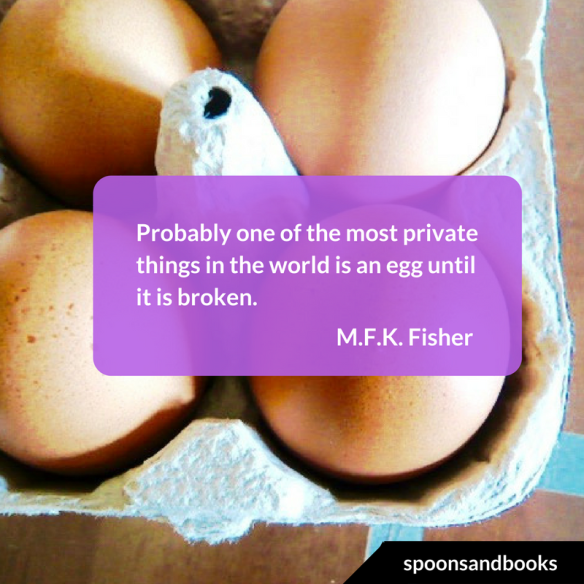
Mary Frances Kennedy Fisher (1908-1992) was one of the first great food writers of the 20th century. She wrote essays, memoir and travel pieces of her life in the USA and France, where she spent several years. Interestingly, though, she did not think of herself as a “food writer”. In the foreword to The Gastronomical Me (1943), she explained: “When I write of hunger, I am really writing about love and the hunger for it, and warmth and the love of it and the hunger for it.”
When I read this line in one of my Food Studies Master’s classes, a door opened for me. Food in itself is wonderful, but what drew me to working in bars and restaurants as a teenager and all through my twenties was the human theatre that played out there every night, celebration, romance, heartbreak, redemption, business. There had been books and scholarly articles examining and affirming my impression, but here for the first time was someone who celebrated it through words, which are after all my other great passion. And I realised I had found my corner in the food world, my tribe.
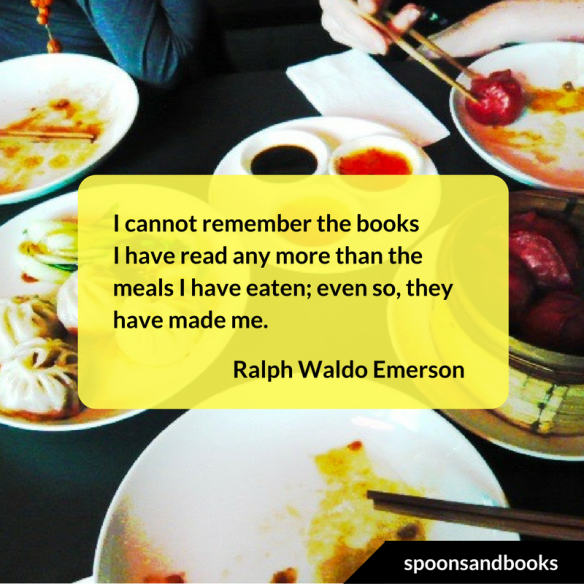
Ralph Waldo Emerson (1803-1882) was a US-American philosopher, essayist and poet who led the Transcendentalist movement of the early 19th century. The Transcendentalists combined Western Romantic and Idealist ideas with Eastern (Hindu) philosophy. They were strongly focused on the human individual, which they believed to be essentially good and true, and saw great value in the communion with Nature, which they viewed also in a spiritual and sometimes even mystic way. Unspoiled nature and the unspoiled, free and self-reliant individual were their ideals. The Transcendentalists were probably the first great intellectual movement in the USA. Other prominent Transcendentalists include Henry David Thoreau (Walden) and Louisa May Alcott (Little Women).
Transcendentalist thought influenced the poet Walt Whitman in the 19th century, and formed a strong legacy for 20th century American art and literature movements, such as the Beat poets (Allen Ginsberg, Jack Kerouac…).

Julia Child (1912-2004) was an American chef, author and TV personality. Actually, her first career was in the Secret Service, which is pretty cool. She met her husband in the Service, who became a diplomat and was posted to Paris. That’s where Julia decided to learn cooking. She began also to teach cooking and eventually published her debut cookbook Mastering the Art of French Cooking, which is famous for making complex French dishes accessible. Her personal style helped matters greatly: she is hilarious and did not take herself too seriously, not even on TV.

Jeanette Winterson (*1959) is a writer and professor of creative writing. She is the author of several semi-autobiographical books; the first among them was Oranges Are Not the Only Fruit. Her books often have a near magical-realist feel, as they often feature highly symbolic elements, which fit her family background rooted in Pentecostal Christianity with its focus on spirituality, miracles, sin and other topics outside of the mundane, daily world. Her book titles sometimes feature fruit (oranges, cherries…) but again, they are used symbolically. Not as food writing, unfortunately.
 Where to find good books in Dublin?
No.3 – Chapters on Parnell Street. A goldmine for hardcover books, and Ireland’s largest independent bookstore.
I used to think of Chapters as a sort of bargain bookstore. The prices are shown on the front of the books with large, red-and-white stickers, and often they are “special prices” and actual bargains. This makes a big difference on hardcover books. I have no great ambition to own my fiction in hardcover, in fact, I prefer paperbacks, as they are lightweight and fit better into my handbags. But food and cookery books often come only in hardcover, and Chapters was instrumental in helping me build up my collection of recipe and reference books on food and wine. For the same reason, anybody interested in coffee table books on Art and Architecture should not miss visiting this store. Continue reading


Where to find books in English in Berlin?
No.6 – Goldhahn & Sampson in Prenzlauer Berg. The cook book lover’s treasure chest.
Goldhahn & Sampson caters for the mind as well as the palate. They sell food, wine and delicatessen – local specialities from around Berlin and elsewhere. A contradiction? Not at all: speciality food is generally rooted in a certain locality. That’s what makes it special and different from the foods from other localities, and of course from the mass-produced products that have the same taste (or lack thereof) everywhere. Continue reading
 Spoons and Books